Last updated November 22, 2026
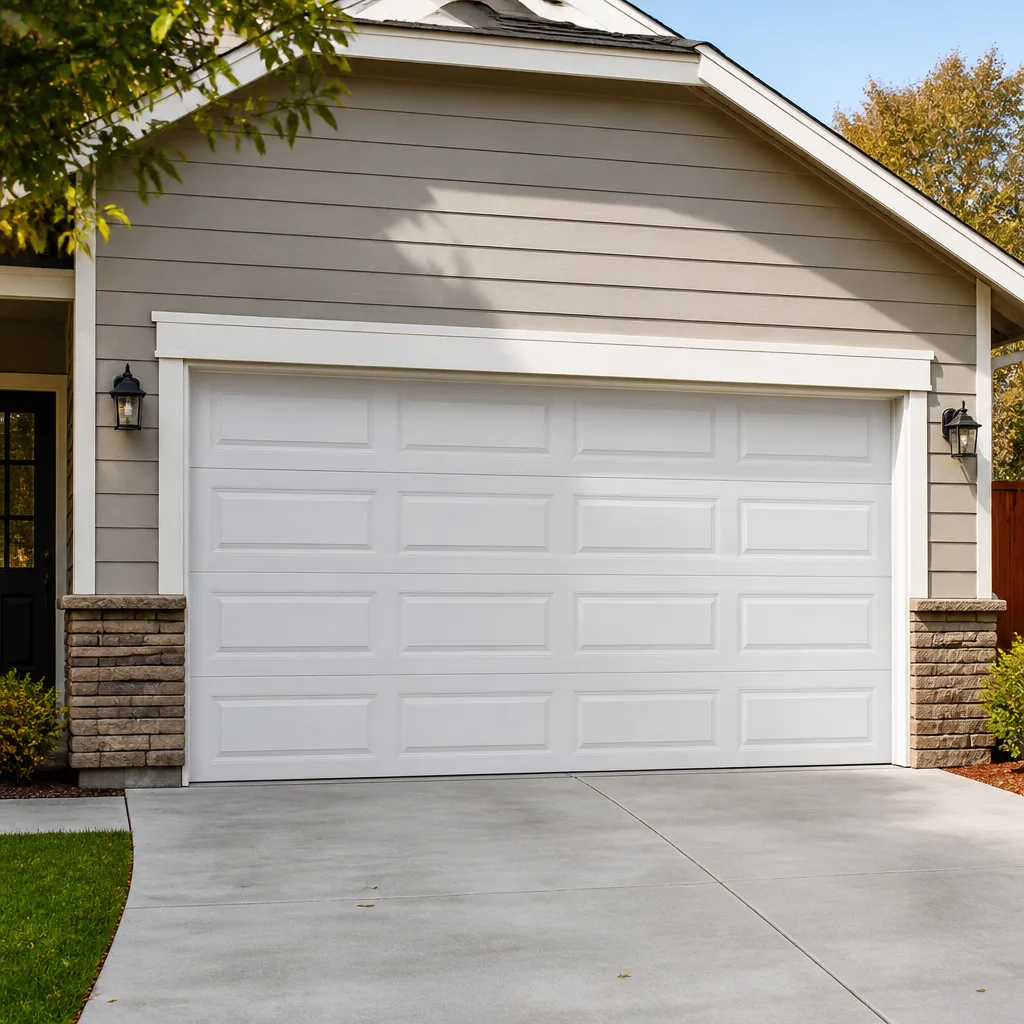 Raised-panel steel
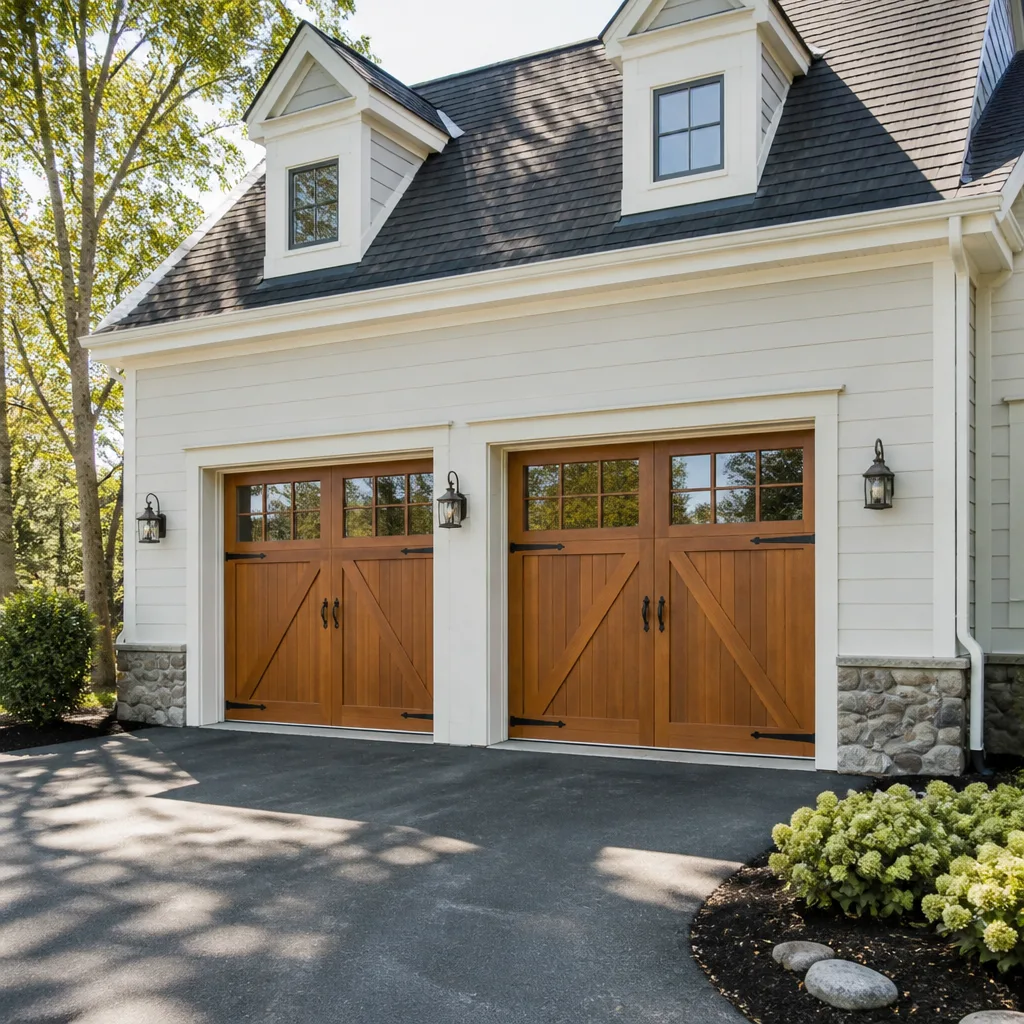 Carriage house
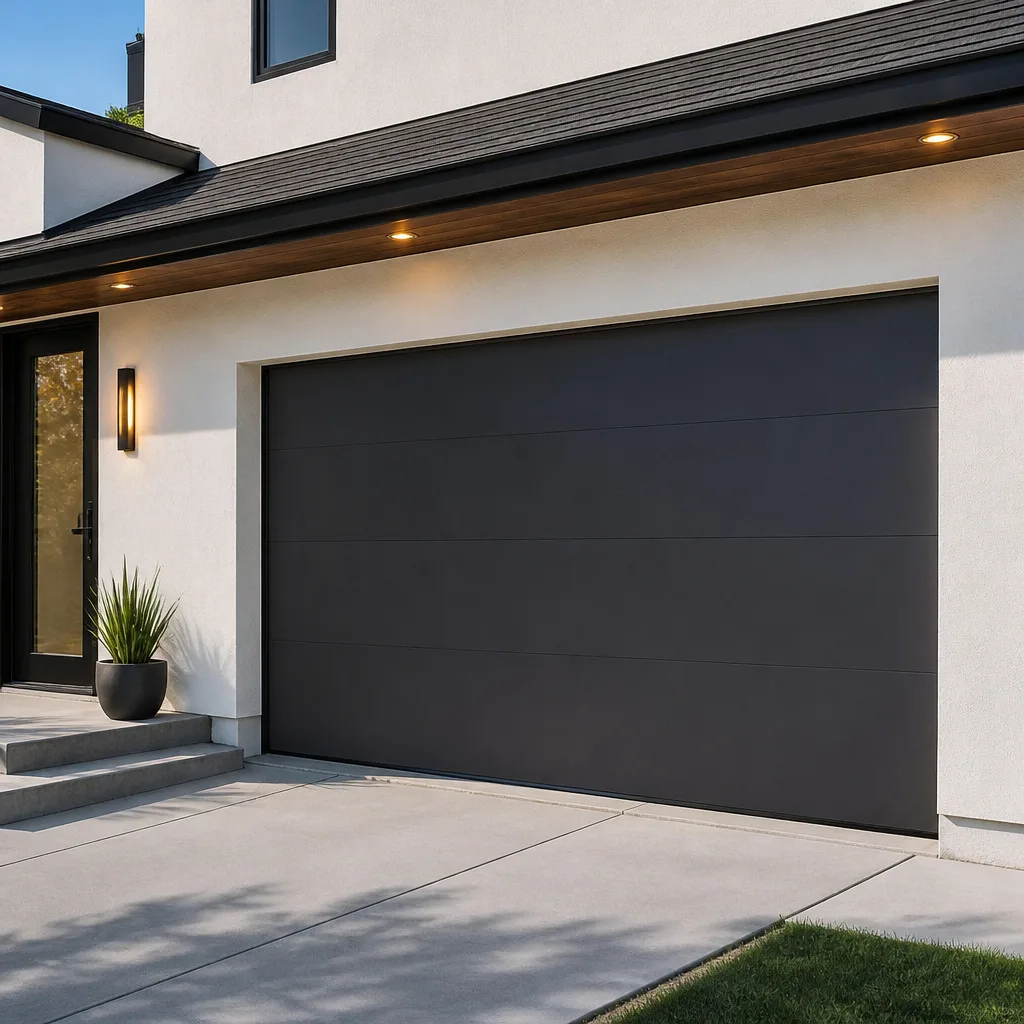 Modern flush
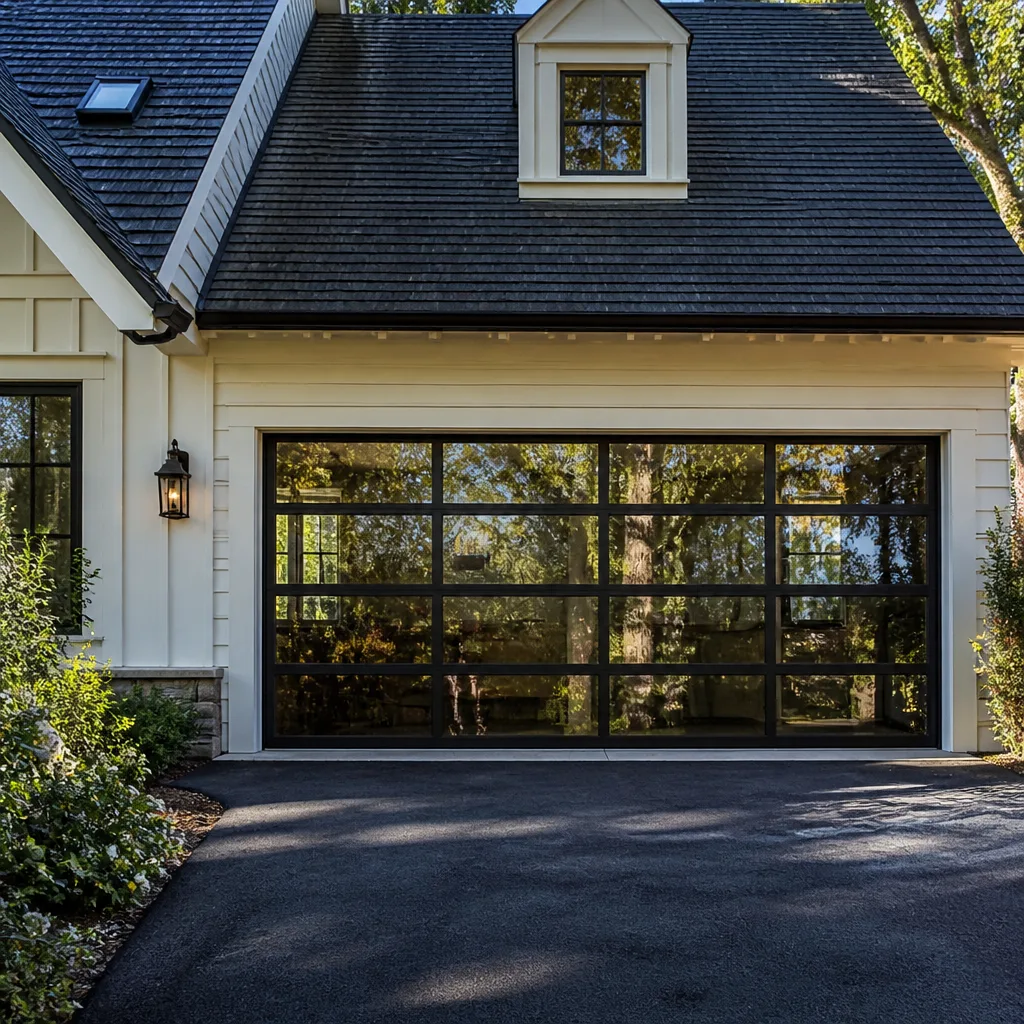 Full-view glass
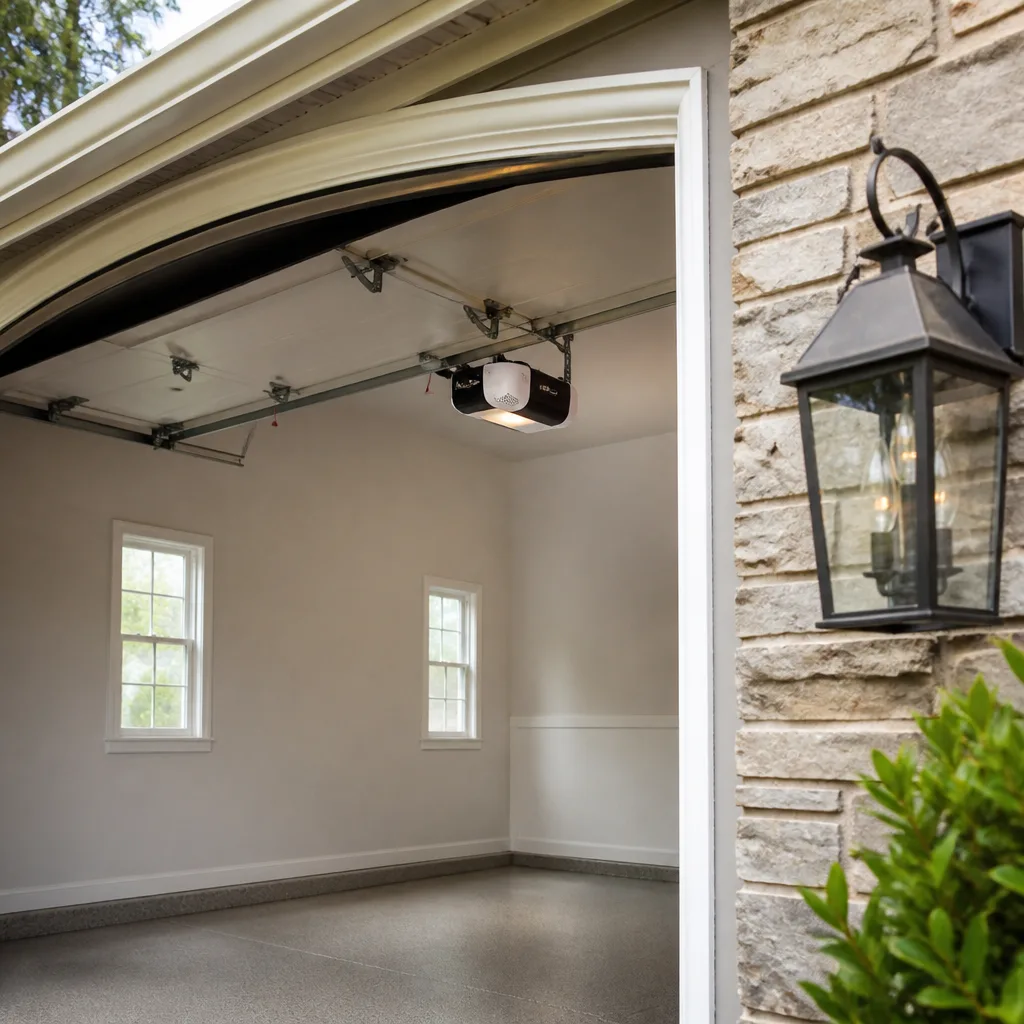 LiftMaster openers
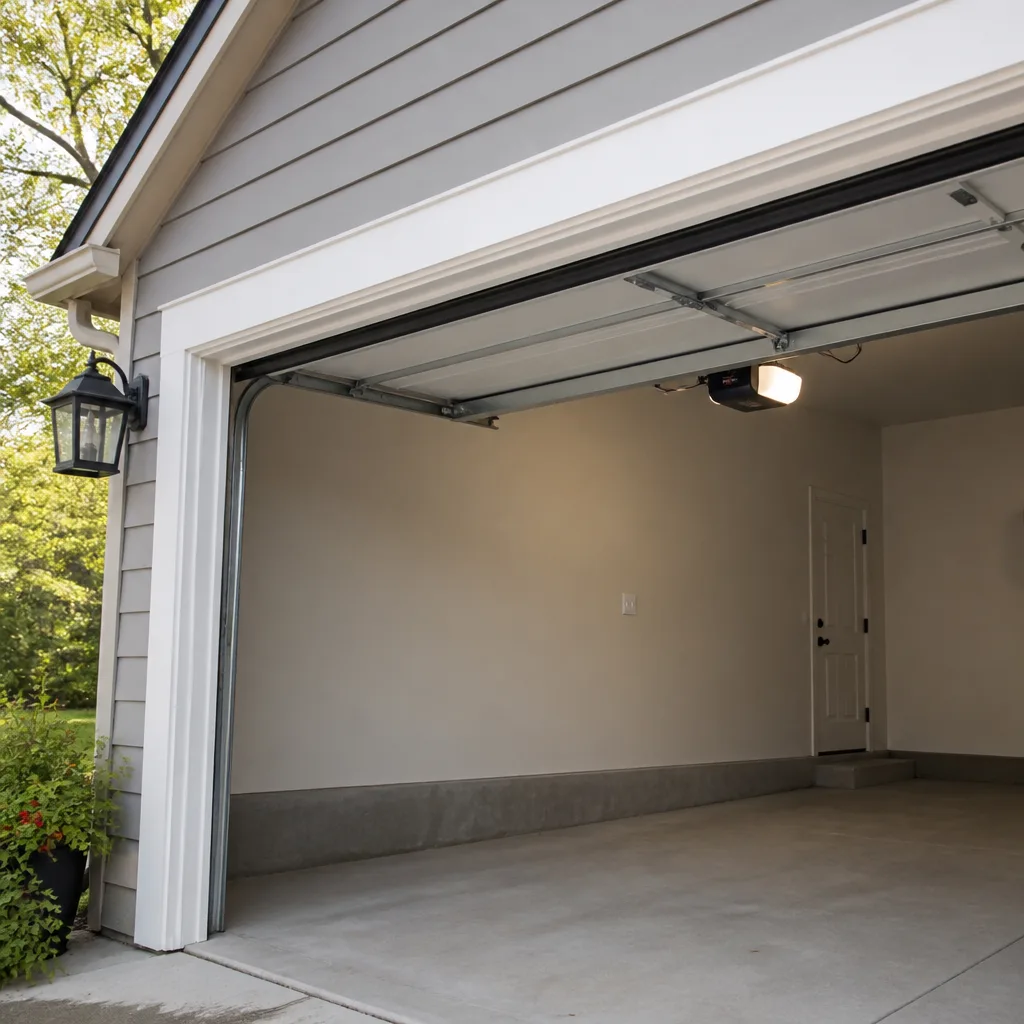 Chamberlain openers
Full 25-point door and opener safety check with every visit - springs, cables, rollers, tracks, and your LiftMaster or Chamberlain opener included
You get a price before we start. It does not change when the pro arrives.
Get your free estimateThe Complete Guide to Garage Doors in Waukegan
Most Waukegan homes went up between 1950 and 1985, and that single fact quietly shapes every garage door decision you’ll make here. The opening in a 1957 ranch off Grand Avenue is rarely the same width and height as a 2004 build near the lake. A door you buy off a showroom floor measured for a “standard” opening may not fit. That’s not a sales line, it’s the first thing that trips up homeowners shopping in Waukegan: the garage itself is often non-standard, and the climate adds a second layer of decisions most national guides ignore. This guide walks through material, insulation, spring type, opener choice, brand performance in cold conditions, and the service calls that recur every year, so you can make decisions that fit your actual house.
Quick Answer
A garage door in Waukegan should be chosen around three local realities: a non-standard opening common in pre-1985 homes, a lake-driven climate with hard freeze-thaw cycles and cold winter wind chill, and a housing mix that includes both attached and detached garages with different spring setups. Insulation, material, spring geometry, and opener drive type all need to answer to those conditions, not to a generic national checklist. Get the measurement right and match the components to cold-climate duty, and the door will outlast one chosen on price alone.
Styles & brands we work with
- Raised-panel steel
- Carriage house
- Modern flush
- Full-view glass
- LiftMaster openers
- Chamberlain openers
Table of Contents
- How Lake Michigan Climate Shapes Your Garage Door
- Why Non-Standard Openings Are Common in Waukegan
- Material Choices: Steel, Wood, and Composite
- Insulation and R-Value for Cold-Climate Homes
- Torsion Springs: Attached vs. Detached Garages
- Opener Types and Brand Performance in Cold Weather
- Brand-by-Brand: Cold-Climate vs. Sun-Belt Lines
- Chronic Waukegan Service Calls and Maintenance Budgeting
How Lake Michigan Climate Shapes Your Garage Door
Waukegan sits on the western shore of Lake Michigan, and that placement means winters here run colder and windier than most of downstate Illinois. The lake moderates summer heat but feeds moisture and wind into winter storms, and wind chill off the water pushes surface temperatures on the door face well below the ambient reading. That matters because the door is the largest moving exterior surface on most homes, and it takes that wind load directly.
Two climate effects drive most of the wear we see:
- Freeze-thaw cycles. Water works into seams, hinges, and the bottom seal, freezes overnight, then thaws during a milder afternoon. Repeated dozens of times a winter, that cycle pries open joints, stiffens rollers, and accelerates weatherstrip failure.
- Wind-driven cold. A door facing open ground or the lake takes sustained pressure against the panel face. Panels flex, and on lighter-gauge doors the flex eventually fatigues the metal and the hinges.
- Lake-effect snow load. Snow packed against the bottom of the door freezes into the seal and can bow the bottom panel if it’s not cleared.
Downstate Illinois sees freeze-thaw too, but with less wind and a shorter deep-cold window. A door specced for Springfield will perform differently in Waukegan. When you’re choosing insulation, seals, and hinge hardware, ask specifically about cold-wind duty, not just “winter rated.”
Why Non-Standard Openings Are Common in Waukegan
A large share of Waukegan homes were built in the post-war decades through the early 1980s, and garage openings in that era were not standardized the way modern construction is. Single-car garages were sometimes 8 feet wide, sometimes 9. Height varied too. A modern replacement door is typically ordered to the exact rough opening, so if a door is ordered to a “standard” size and doesn’t fit, the fix is expensive.
That’s why any new-door purchase should start with a specialist measurement of the actual opening, not a tape-measure guess from the homeowner. Here is the sequence a proper measurement follows:
- Measure the finished opening width at the top, middle, and bottom.
- Measure the opening height on the left and right sides.
- Measure the headroom above the opening to confirm spring and track clearance.
- Measure the backroom behind the opening for the horizontal track run.
- Check side clearance for the vertical tracks and the jamb condition.
- Note any framing, drywall, or header irregularity that would prevent a true square opening.
If those numbers aren’t square, the door has to be custom-ordered. That takes time and adds cost, and it’s the most common reason a Waukegan door replacement runs longer than the homeowner expected. Skipping the measurement step is the single most expensive shortcut in this trade.
Material Choices: Steel, Wood, and Composite
Steel dominates residential garage doors in Waukegan for good reason: it handles freeze-thaw better than wood, it doesn’t need refinishing, and modern steel doors come in grades that hold up to wind flex. But wood, composite, and aluminum each make sense in specific situations, and the correct choice depends on the garage type and how the door interacts with the house.
- Steel. Best all-around for Waukegan climate. Look for a two-layer or three-layer construction (steel skin over insulation over steel back) for cold-climate performance. Single-layer steel is the weakest choice in wind.
- Wood. Beautiful on a period home, but wood absorbs moisture and needs regular sealing in a climate with this much freeze-thaw. Doors from the 1970s that were never sealed are the ones we see rotting at the bottom rail and stiles.
- Composite and vinyl. Resistant to moisture and rot, but check the panel design for wind rating. Lighter composite panels flex more in a lake-wind exposure.
- Aluminum. Light and rust-resistant, but dents in wind-blown debris. Usually reserved for specific architectural looks.
For an attached garage, choose based on how much of the interior you want the door to protect from cold. For a detached garage in a neighborhood of older homes, material choice usually centers on durability and low maintenance, not thermal performance.
Insulation and R-Value for Cold-Climate Homes
Insulation is where most homeowners overspend or underspend, depending on the garage. An attached garage insulated door reduces heat loss from the garage into the house. A detached garage doesn’t connect to the home’s thermal envelope, so insulation only matters if you spend time out there or store temperature-sensitive items. Choosing insulation based on the door’s role, not on a national R-value number, is the right starting point.
What matters more than the R-value on the box:
- Faces and thickness. A door with expanded polystyrene (EPS) panels at a modest thickness performs decently. Polyurethane at a higher thickness performs noticeably better per inch, but only if the seals around the door are tight.
- Seals. A high-R panel with a leaking bottom seal and loose perimeter weatherstripping is a waste. Fix the seal first, then upgrade insulation.
- Thermal break. Metal-to-metal contact through the door transfers cold straight through. A proper thermal break in the panel construction matters in a lake-wind winter.
Ask your provider for a specific R-value figure and the panel construction behind it. A vague “fully insulated” claim tells you nothing. Across the country people overpay for R-value and underpay for seals, and Waukegan’s freeze-thaw makes that asymmetry worse.
Torsion Springs: Attached vs. Detached Garages
The spring system is the most dangerous component in any garage door, and its configuration depends on the garage. A torsion spring mounts on a shaft above the door. An extension spring runs along the horizontal track on each side. Most modern attached garages use torsion. Many older detached garages use extension or a torsion setup that’s smaller because the door is lighter.
Why this matters for Waukegan:
- Detached garages are common in older Waukegan neighborhoods. Heavier insulated doors on those buildings require a spring sized for the weight, and swapping to a torsion setup from extension is a genuine upgrade in reliability.
- Attached garages with a two-car insulated door put more load on the torsion spring. Cycle life is shorter, and the spring will fail first in the deep-cold stretch of February, when steel is most stressed and lubricant is thickest.
- Cold weather affects spring tension. A door that balanced fine in October may feel heavy in January. If it strains to lift, don’t force it.
Spring work is the one job a homeowner should never attempt personally. A torsion spring stores a tremendous amount of energy, and if it releases during a DIY attempt, it can cause serious injury. Leave this to a trained technician; look for garage door spring repair as a specific line item when you call, and confirm the spring is sized and replaced in-house. This is the kind of job our specialists handle directly, not subcontracted.
Opener Types and Brand Performance in Cold Weather
An opener that works smoothly in June may labor in January. Cold thickens lubricant, stiffens the door’s seals, and puts more load on the motor and drive mechanism. Choosing the right drive type and understanding how your opener brand behaves in cold weather matters more in Waukegan than in most of the country.
- Belt drive. Quietest and, on a well-maintained door, handles cold weather well. Best for attached garages where noise carries into the house.
- Chain drive. More forgiving of load variance and generally reliable in cold. Louder, but proven.
- Screw drive. Fewer moving parts, good in cold, more expensive to replace the rail if it wears.
- Jackshaft. Mounts on the side, common on homes with high-lift track or low overhead clearance. Excellent for garage configurations that don’t fit a ceiling-mounted unit.
Brand behavior differs. LiftMaster and Chamberlain use a similar drive platform and both offer battery backup and smart-connect features; both are built for cold-climate duty. Genie units are common on older Waukegan installs and are repairable, but parts availability is the main consideration on older models. If your opener is straining in winter, the issue is often the door’s spring balance rather than the opener itself; a technician should diagnose which before recommending a replacement. If it’s genuinely the unit, garage door opener repair is a discrete service, not a door replacement in disguise.
Brand-by-Brand: Cold-Climate vs. Sun-Belt Lines
Not every manufacturer line is engineered for the same conditions. Some lines are tuned for hot, dry, Sun Belt climates with wide temperature swings and little snow. Others are built for cold-wet climates with freeze-thaw and wind. Matching the line to Waukegan is where a specialist’s brand familiarity pays off.
What to ask when comparing:
- Is this specific product line rated for cold-climate duty, or is it a Sun Belt line being sold nationally?
- What’s the hinge and roller duty rating? Cheaper hardware fails faster in freeze-thaw.
- What gauge is the steel skin on the face panels?
- Does the bottom seal handle ice and snow, or will the door bow under snow load?
- Is the panel design rated for wind pressure at this exposure?
Clopay offers cold-climate-appropriate steel door lines and a range of insulation levels. Amarr has similar cold-duty construction. LiftMaster and Chamberlain on the opener side build around a mechanic-friendly platform. Wayne Dalton, Raynor, Genie, and Craftsman round out the coverage. Our technicians work on all eight of these brands directly, which means a brand-name diagnosis, not a generic stand-in. When you call for a repair, name your brand and your model year if you know it; that shortens the call-to-diagnosis cycle.
If your door is at the end of its service life, a specialist measurement and a written cost estimate should come before you commit to any brand. That’s what a proper garage door installation looks like when it’s done correctly.
Chronic Waukegan Service Calls and Maintenance Budgeting
A handful of service calls recur across Waukegan year after year. Knowing the seasonal pattern lets you budget instead of panic when the door won’t close on a February morning.
- February spring failures. Cold steel is least forgiving when the door is heaviest. Torsion springs fail most often in the deep-cold stretch. If your spring is at the end of its cycle life, plan for it before winter.
- Sensor freeze-ups. Moisture and ice pack the photo-eye sensors at the base of the track. The door reverses or won’t close. Cleaning the sensor faces and confirming alignment is the first check.
- Wood rot on 1970s doors. Doors from the 1970s that were never sealed are the ones we’re most often replacing or repairing at the bottom rail and stiles. Sealing those doors before winter buys years.
- Roller and hinge fatigue. Freeze-thaw cycles and lack of lubrication wear these components faster here than in a dry climate.
- Bottom seal failure. The seal takes the most direct contact with ice and snow. A leaking seal also nullifies any insulation behind it.
- Panel flex on wind-exposed doors. Doors facing open ground take more load. Lighter-gauge panels fatigue faster.
A sensible maintenance rhythm: lubricate hinges, rollers, and springs twice a year; test the safety reverse monthly; inspect the bottom seal before the first hard freeze; and have the spring cycle life checked before winter. That’s roughly an hour of homeowner maintenance twice a year, and it prevents most urgent calls.
When a door fails and can’t wait, we handle it as garage door repair with emergency response. That’s not a side service for us; it’s a named core offering, and we’re prepared for it. If it’s a failure that can’t wait, call and we’ll book you appropriately, including early mornings or Sundays when the schedule allows.
Common Mistakes to Avoid
- Ordering a door to “standard” size without measuring the opening. Most Waukegan homes weren’t built to a standard opening, and a door ordered wrong is expensive to fix. Measure first, order second.
- Trying to replace a torsion spring yourself. Torsion springs store enough energy to cause serious injury if released incorrectly. This is a job for a trained technician; anyone telling you it’s a simple DIY fix is wrong.
- Buying insulation on the R-value alone. A high-R door with a leaking bottom seal and loose weatherstripping wastes most of that insulation. Fix the seals first.
- Replacing the opener when the spring is the real problem. In winter, a heavy-feeling door is usually a sign the spring has lost tension or is failing. Diagnose the door before replacing the opener.
- Ignoring wood rot on an older door. A 1970s wood door that was never sealed will rot from the bottom up. Catch it early and you can repair; miss it and you’re replacing the door.
- Letting the maintenance rhythm lapse. Two lubrication passes a year and a monthly safety-reverse test prevent most urgent calls. Skipping them for a year is what turns a repair into a replacement.
- Not naming the brand when you call for service. If you have a LiftMaster, Chamberlain, Clopay, or Amarr system, telling us on the call helps the technician arrive prepared. Guessing prolongs the process.
See the difference
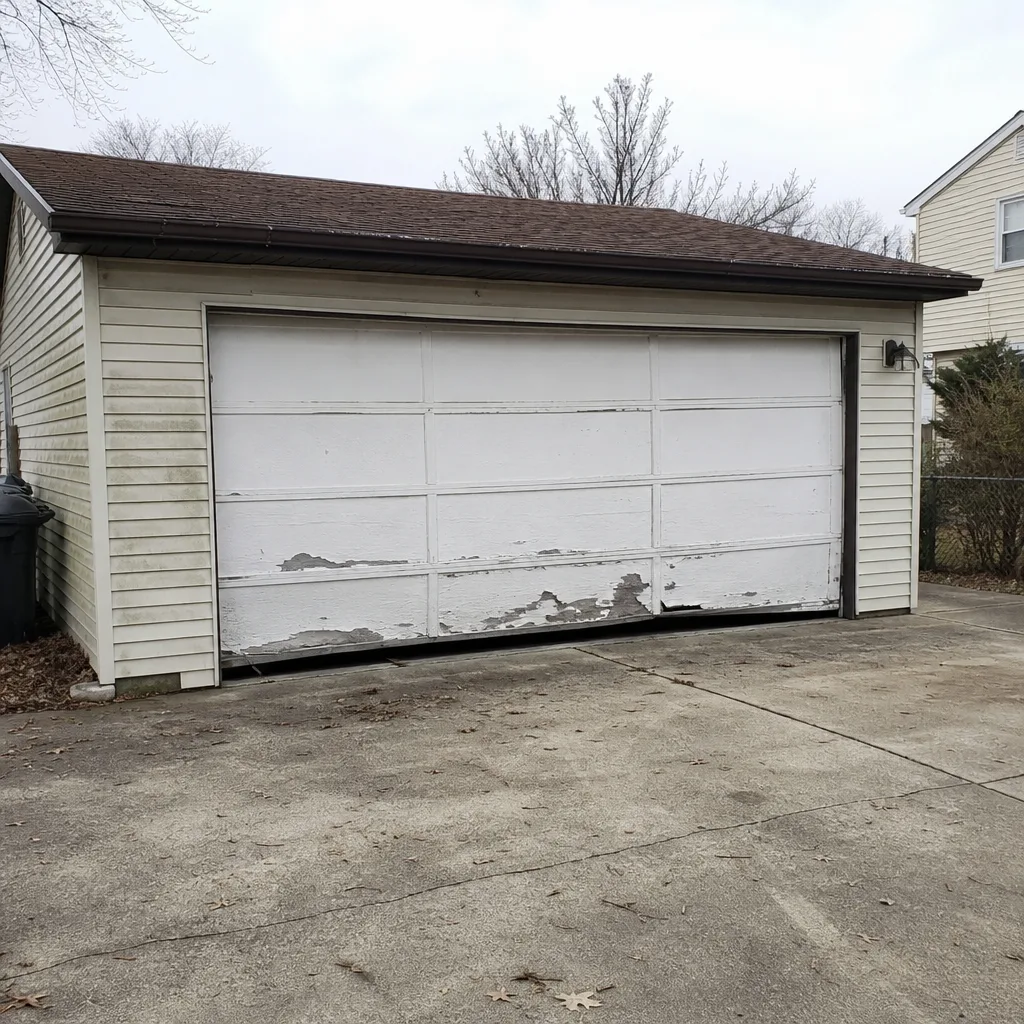 Before
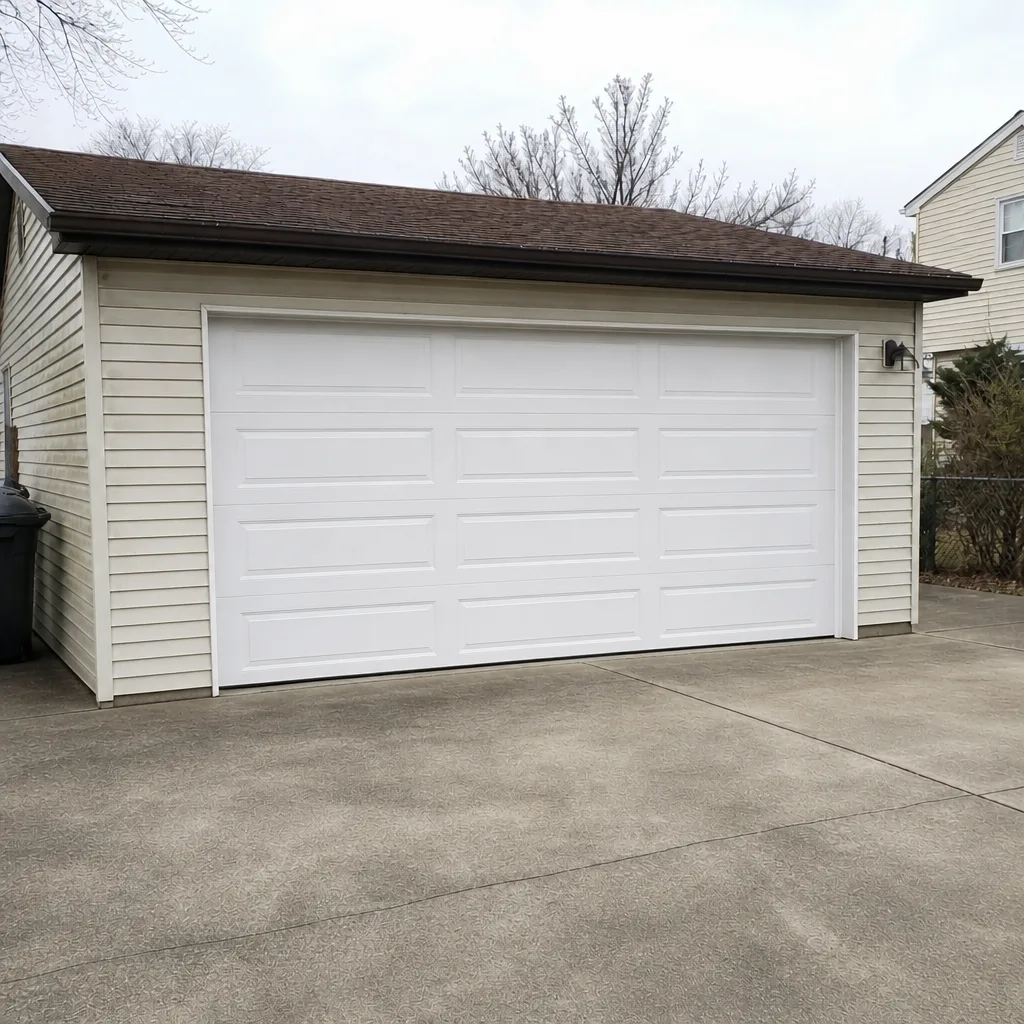 After
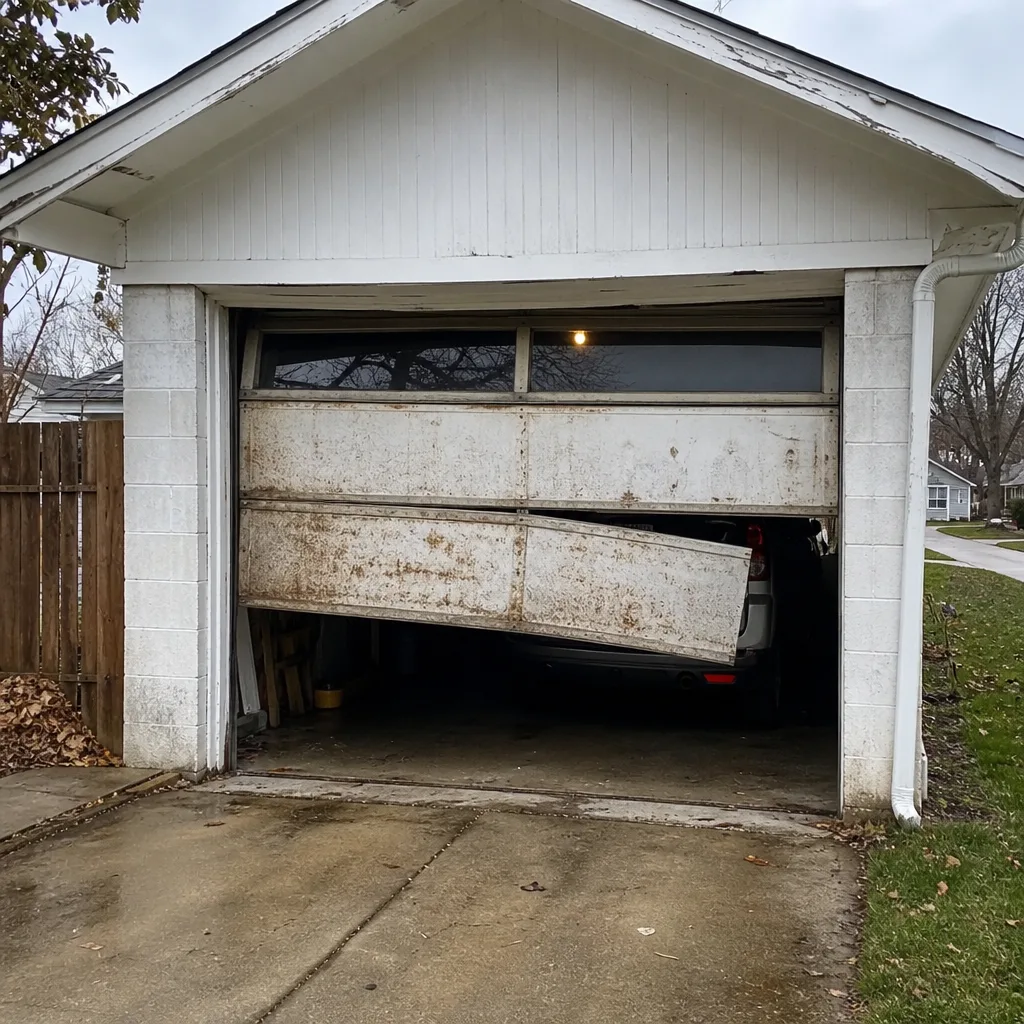 Before
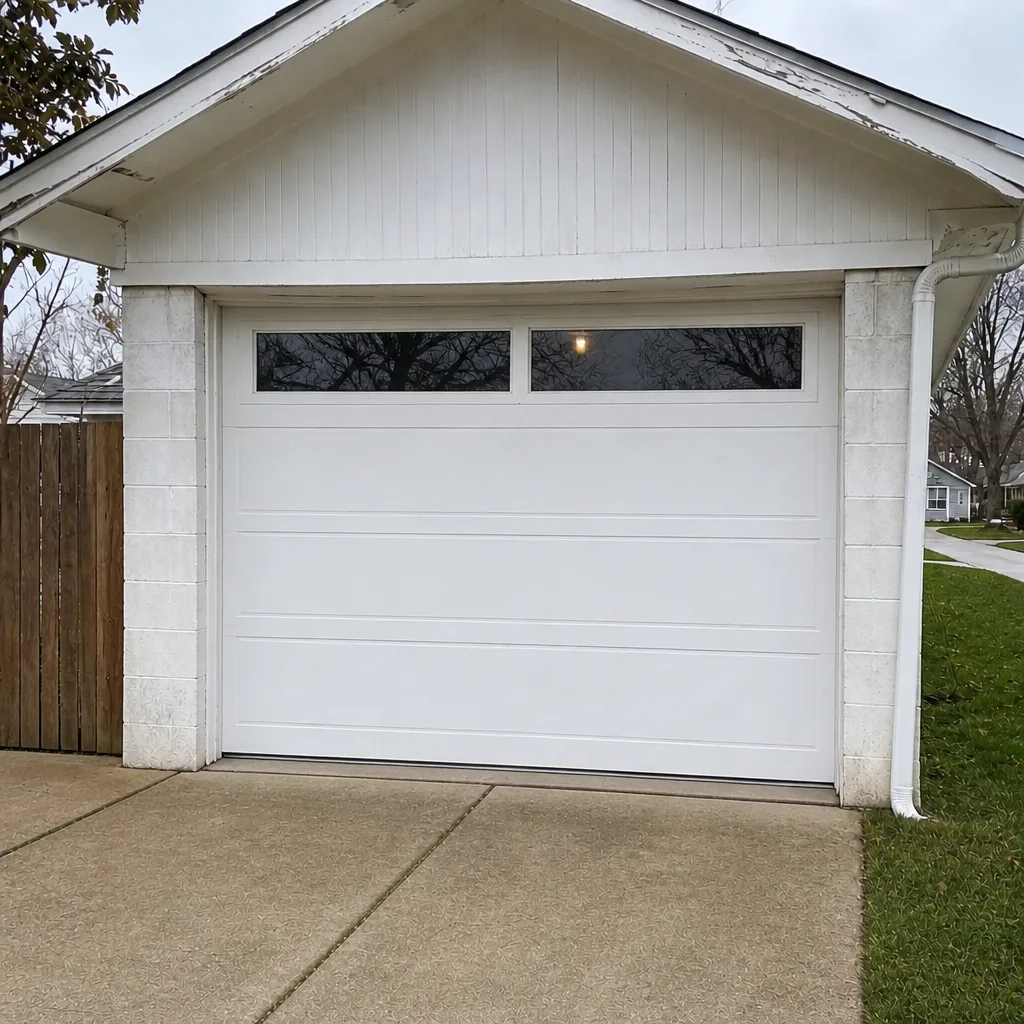 After
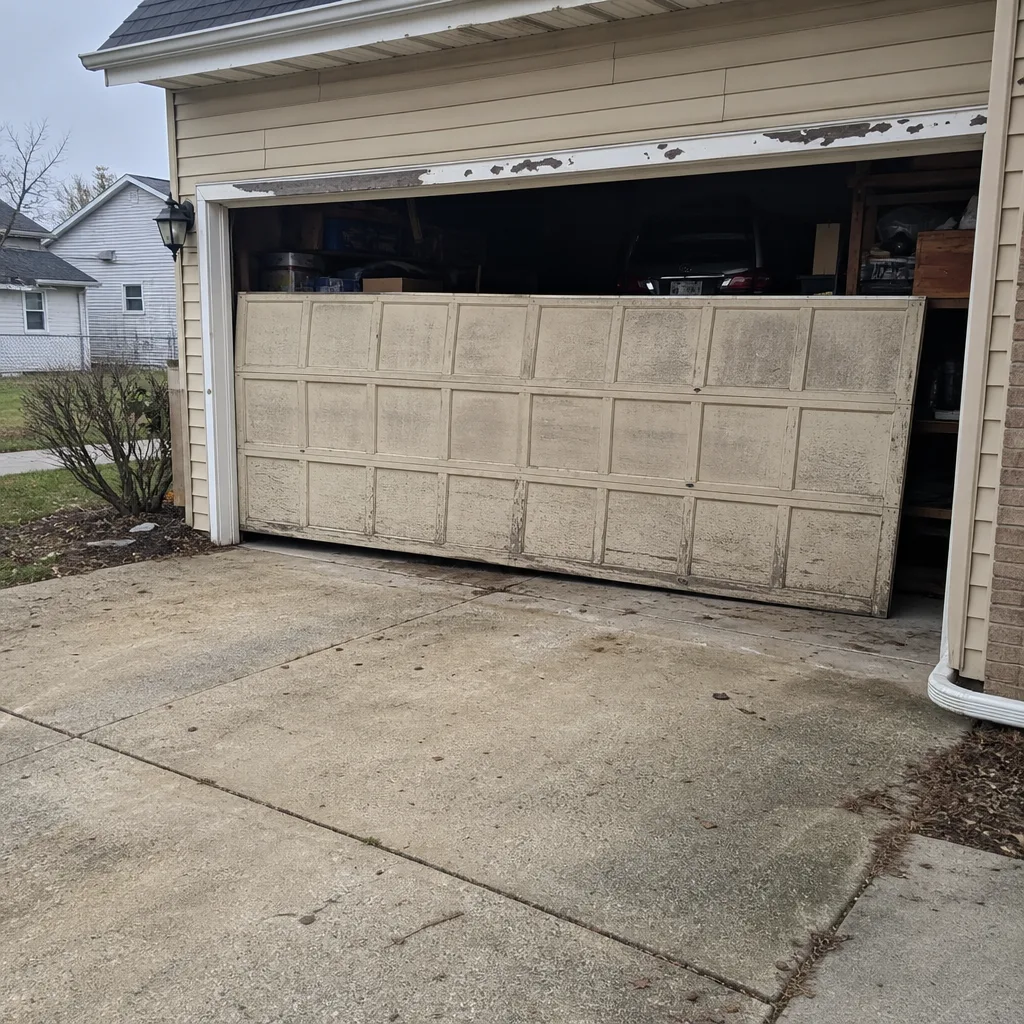 Before
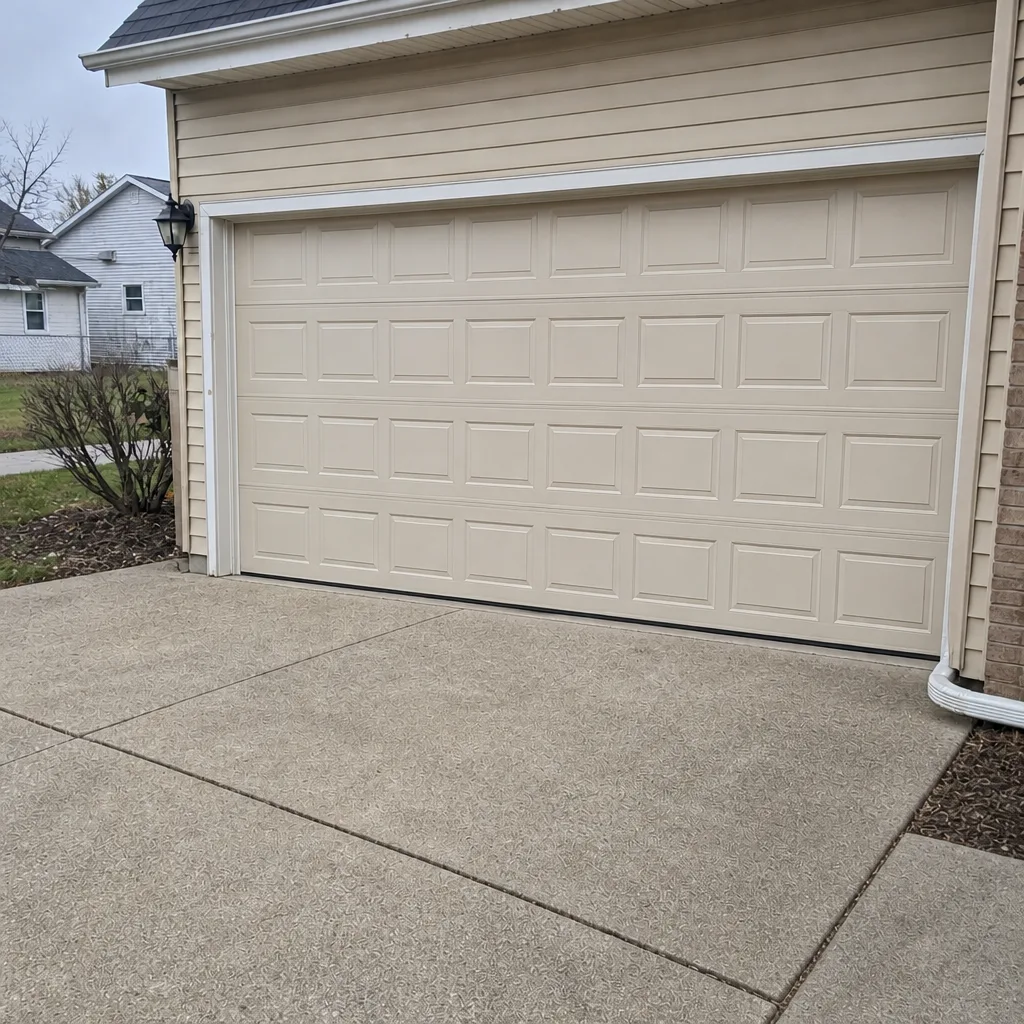 After
When to Call a Professional
Call a specialist when any of these are true: the door won’t open or close at all, a spring has visibly broken (a gap in the coil or a dangling extension spring), the door reverses or stops mid-travel, the door is visibly out of balance or drags, hinges or rollers are cracked, the bottom seal is torn or the panel is rotted, or an opener has failed mid-life. Emergency calls for a door stuck open or off-track should be treated as urgent, and we handle those as a named offering. Before any work begins, we quote the price, you agree to it, and the job starts on that agreement. Waukegan Garage Door Repair Co offers free estimates in Waukegan; call (877) 419-9329 to schedule. For an overview of our broader service, see Waukegan Garage Door Repair Co.
Frequently Asked Questions
You’ll know once it’s measured. Homes built between 1950 and 1985 often have open widths and heights that don’t match current standard sizes. The only way to confirm is a proper measurement of width, height, headroom, and backroom by a specialist before any door is ordered. A tape measure in the hands of the homeowner is a good start but not the final answer.
There’s no single correct number; it depends on whether the garage is attached or detached and how much you want the door to protect the home’s interior. What matters more than the headline R-value is the panel construction, the seals around the door, and any thermal break in the panel. Ask for the specific R-value and the panel construction behind it, and fix seals before upgrading insulation.
It’s the most common month for spring failure here because cold steel is at its least forgiving and the door is at its heaviest. If your torsion spring is past its cycle life, plan for replacement before winter. Never attempt spring work yourself; a trained technician with the right tools and knowledge should handle it.
We work on eight major manufacturers: LiftMaster, Chamberlain, Genie, Clopay, Amarr, Wayne Dalton, Craftsman, and Raynor. That range means we can typically diagnose and fix the actual system in your garage rather than a generic stand-in. If your brand is on that list, name it when you call.
Yes, emergency garage door service is one of our named core offerings. If a door is stuck open, off-track, or won’t close, call and we’ll schedule accordingly, including early mornings or Sundays when the schedule allows. We’re closed on Saturdays.
It depends on the opening (standard vs. custom-ordered for a non-standard rough opening), the material, insulation, and the hardware line. Prices vary significantly by specification. Call (877) 419-9329 for an exact quote; estimates are free.
Attached garages benefit from an insulated door because they share the home’s thermal envelope. Detached garages are better served by durability, low maintenance, and a spring system sized for the actual door weight. Springs differ between the two; matching the setup to the garage is what keeps the door reliable across Waukegan’s winters.
It’s a bad idea. A garage door under torsion spring load is dangerous to handle, and a door installed out of balance can fail catastrophically. Installation, spring work, and any job that involves releasing spring tension should be handled by a trained technician. If you’re doing upkeep like lubricating hinges or testing the safety reverse, that’s reasonable; installation and spring work are not.
Homeowner maintenance is roughly an hour twice a year: lubricate hinges, rollers, and the spring; test the safety reverse monthly; inspect the bottom seal before the first freeze. Beyond that, budget for a professional spring-cycle inspection before winter. That rhythm prevents most urgent calls, which is where the real cost savings live.
The Bottom Line
A garage door in Waukegan needs to be chosen around this climate and this housing stock, not a generic national checklist. Non-standard openings in pre-1985 homes make a specialist measurement non-negotiable before any order is placed. Insulation should follow the garage’s role; steel and composite handle freeze-thaw better than unsealed wood; spring type depends on whether the garage is attached or detached; opener brand and line matter for cold-weather duty. February spring failures, sensor freeze-ups, and rot on 1970s wood doors are the recurring service calls, and a two-times-a-year maintenance rhythm prevents most of them. When a repair can’t wait, that’s an emergency call, and it’s a named capability here, not a reluctant after-hours line. Call (877) 419-9329 for a free estimate in Waukegan; the price is quoted and agreed before any work starts.
Written by the team at Waukegan Garage Door Repair Co.